
The Best Fluffy Pancakes recipe you will fall in love with. Full of tips and tricks to help you make the best pancakes.

Refreshing a bedroom for winter rest doesn’t require buying new bedding. By using what you already have, small changes can make the space feel warmer and more inviting. Simple swaps like layering blankets or adjusting the room’s lighting can improve comfort without extra cost.

The key to a cozy, restful bedroom is making smart changes to your current setup, such as layering your bedding and creating a soft, warm atmosphere. These updates can help maintain warmth and improve sleep quality during colder months.
A few easy adjustments, like rearranging furniture or adding soft textures to curtains and pillows, can also make the room feel refreshed for winter. These ideas focus on comfort and relaxation while keeping the bedroom clutter-free.
Key Takeways
- Layer existing bedding to add warmth without buying new items.
- Use soft lighting to create a cozy and calming space.
- Rearrange and declutter the room for a fresh winter feel.
Layering and Caring for Your Existing Bedding

Creating a warm, cozy bed for winter doesn’t mean buying new bedding. Instead, it requires smart use of what’s already available and caring for it properly to keep it fresh and comfortable.
Utilizing Different Layers for Warmth
Using multiple layers helps trap heat and adds depth to the bed without feeling heavy. Start with your well-fitting sheets as the base. Add thin blankets or quilts over the sheets before placing a heavier comforter or duvet on top.
Consider adding a lightweight fleece or flannel blanket between the sheet and comforter to boost warmth. Throw blankets at the foot of the bed provide extra heat that can be pulled up when needed. Remember, layering lets air circulate, which can prevent overheating.
Adjust layers nightly based on the room temperature. This method keeps the bed cozy and easy to manage throughout winter.
Mixing and Matching Bed Linens
Mixing different textures and colors from existing linens can refresh the bedroom’s appearance without buying new items. Combine cotton sheets with a flannel or velvet blanket for contrast and warmth.
Pillowcases and shams don’t have to match perfectly. Using different but complementary colors or patterns creates a layered look that adds interest and comfort. Euro shams behind standard pillows help build dimension.
Switch out pillow covers or rotate linens regularly to give the bed a fresh feel. This simple change brightens the bedroom atmosphere and makes the bed more inviting.
Refreshing Bedding with Proper Care
Proper care can make old bedding feel like new. Wash sheets and blankets regularly, following care labels to maintain softness and durability. Using gentle detergents and avoiding fabric softeners prolongs fabric life.
Fluff pillows and comforters to keep them full and supportive. Airing bedding outside on dry, sunny days removes moisture and odors.
For stubborn smells, add white vinegar or baking soda to the wash cycle. Stability in washing habits helps preserve warmth and improves sleep quality through clean, comfortable bedding.
Incorporating Cozy Lighting and Ambience
Creating a warm atmosphere in the bedroom can greatly improve comfort during winter. Using targeted lighting that is soft and inviting helps set a calming mood without making the room feel harsh or overly bright. Different light sources work together to provide flexibility and layered lighting.
Using Bedside Lamps with Warm-Toned Bulbs
Bedside lamps are essential for adding focused light while maintaining a cozy vibe. Choosing warm-toned bulbs, such as those with a color temperature around 2700K, casts a soft, yellowish glow. This type of light reduces harshness and helps signal the body to relax before sleep.
Position lamps on either side of the bed to balance the lighting and avoid strong shadows. Lamps with dimmer switches allow for adjustable brightness, supporting activities like reading or winding down. Using warm-toned bulbs in these lamps makes the room feel inviting and peaceful without needing to change any bed linens.
Setting the Mood with Fairy Lights
Fairy lights are a simple, low-cost way to add gentle illumination that enhances the bedroom’s warmth. Draped along a headboard, shelves, or walls, these small lights create a soft background glow without being overpowering.
Fairy lights can be battery-operated or plugged in, making them easy to use anywhere. They work well paired with other types of lighting to build layers. The subtle twinkle adds a touch of charm while promoting relaxation during the long winter nights.
Enhancing Ambience Without Overhead Lighting
Relying less on overhead lights can prevent the room from feeling cold and clinical. Instead, choosing alternative sources like wall sconces, floor lamps, or table lamps spreads light at different heights and angles, creating depth.
Soft, indirect lighting reduces glare and avoids the brightness that can disturb rest. Using dimmable options is ideal because it lets people control the intensity based on the time of day. Layering ambient and task lighting without the harshness of ceiling fixtures produces a more soothing, restful bedroom environment.
Adapting Textures and Window Treatments for Winter

Updating textures and window treatments can make a bedroom feel warmer and more comfortable in winter. Choosing the right curtains, rugs, and soft accents helps trap heat and adds cozy layers without buying new bedding.
Switching to Heavier Curtains
Heavier curtains help insulate the room and keep cold air out. Materials like velvet, thick cotton, or wool are good options. Floor-to-ceiling draperies not only add warmth but also make the room feel taller and more inviting.
Using double layers, such as combining blinds with curtains, gives better control over light and temperature. Closing heavy curtains at night reduces heat loss through windows. They also block drafts and lower noise, improving sleep quality during cold months.
Adding or Alternating Rugs
Rugs can add warmth to cold floors and change the feel of a bedroom easily. Thick wool or shag rugs work well as they trap heat and add softness underfoot. Layering smaller rugs over larger ones creates depth and texture, making the space cozier without much effort.
Moving rugs around the room or swapping lightweight ones for plush fabrics changes the room’s look while providing insulation. Rugs also reduce sounds, making the room quieter and more restful during winter.
Integrating Tactile Throw Pillows and Blankets
Throw pillows and blankets are quick ways to add warmth and texture. Choosing fabrics like fleece, faux fur, or chunky knits increases comfort. Mixing different textures creates visual interest and invites relaxation.
Placing these tactile items on chairs, benches, or at the foot of the bed layers softness beyond the bedding. They provide extra warmth for chilly evenings and can be easily stored or swapped when the season changes.
Decluttering and Rearranging for a Winter Refresh
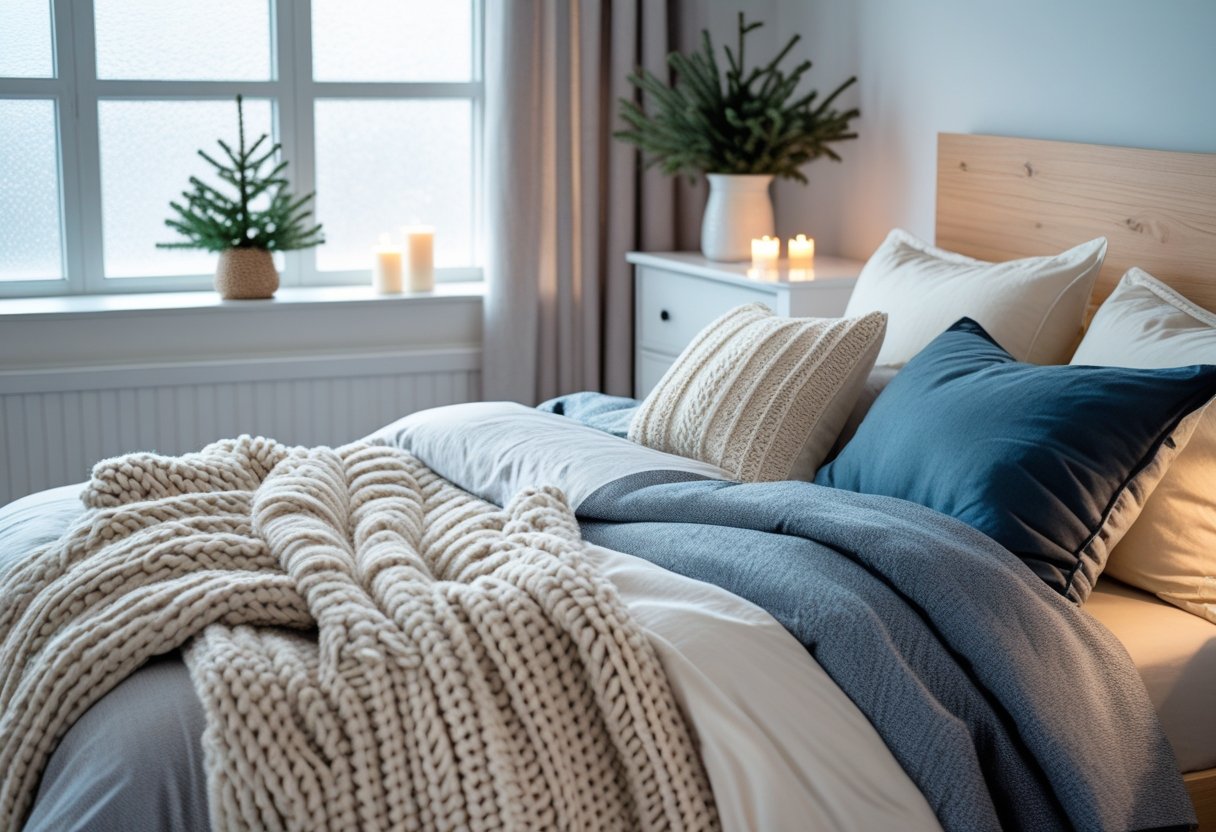
A winter bedroom refresh starts with clearing out clutter and organizing seasonal items. Rearranging furniture can improve warmth and flow. Adding simple seasonal touches makes the space feel cozy without needing new bedding.
Rotating and Organizing Seasonal Items
Removing out-of-season items creates space and reduces clutter. Winter clothes, blankets, and accessories should be stored in labeled bins or under-bed containers. This keeps them accessible but out of the way.
Organize items by use and size. For example, bulky winter sweaters go in a top bin, while lighter scarves stay in a drawer. Clear containers or baskets help quickly spot what’s inside.
Use hooks or small shelves for winter accessories like hats and gloves near the door or closet. Keeping these items neat saves time and keeps the bedroom tidy during the colder months.
Rearranging Bedroom Furniture
Moving furniture can improve heat retention and airflow. Place the bed away from drafty windows and near a heat source if possible. Adding a small rug under the bed or near where feet rest adds warmth and texture.
Clear pathways to let natural light reach more parts of the room. Position seating or desks near windows for cozy daylight work or reading spots. Avoid blocking radiators or vents.
Even small changes, like angling a chair toward a window or relocating nightstands, can open the space and make it feel fresh for winter.
Styling with Seasonal Accents and Decor
Simple decor swaps boost the winter vibe without new bedding. Add soft throw pillows in warm tones like deep reds, browns, or grays. Layer in knitted or fleece throws on the bed or chairs.
Bring in natural elements—pinecones, evergreen branches, or dried orange slices—to add texture and seasonal smell. Use candles or fairy lights to create gentle, warm lighting after dark.
Switch curtains to heavier fabrics or darker colors that help block cold drafts and trap warmth. These small changes make the room welcoming and restful for winter nights.
Frequently Asked Questions

This section highlights practical and budget-friendly ways to create a warm and inviting bedroom for winter rest. It covers ideas focused on comfort, air quality, and smart use of existing items.
What are simple ways to make a bedroom cozy for winter?
Using warm, neutral-toned blankets and layering textiles like throws and cushions helps add warmth without buying new bedding. Incorporating soft lighting and seasonal decor can make the space feel snug and inviting.
Adding rugs or slipcovers to furniture and blocking drafts from windows also enhances the cozy atmosphere. Small touches like these can improve comfort during colder months.
What DIY makeover ideas can upgrade a bedroom without new purchases?
Rearranging furniture to maximize space and light gives the room a fresh look. Changing pillow arrangements or switching out decorative items you already own can update the feel.
Painting or cleaning walls, updating lampshades, and adding plants from around the home add style with no extra cost. These simple updates refresh the space effectively.
How can you refresh the air in your bedroom for a restful winter environment?
Opening windows for a short time daily helps circulate fresh air without losing too much heat. Using natural air-purifying plants removes toxins and improves air quality.
Cleaning air vents, filters, and using a dehumidifier if needed keeps the air clean and comfortable, supporting better sleep through the winter months.
What cost-effective methods can be used to redo a bedroom on a budget?
Focus on small changes like switching curtains to thicker, warm fabrics or adding blackout liners to retain heat. Rearranging or decluttering creates a larger feel without spending money.
Using multi-purpose items and creatively repurposing decor extends what’s already owned. These approaches deliver noticeable change with minimal expense.
What are the best guest room bedding ideas for the winter season?
Layering light blankets with heavier throws ensures guests can adjust warmth to their preference. Neutral bedding colors offer flexibility and a clean look that fits all seasons.
Using easy-care fabrics that stay warm but breathe well, like cotton or flannel, keeps guests comfortable. Minimal decorating paired with these layers creates a welcoming space.
How can you rearrange your bedroom to improve its look and feel during the winter?
Positioning the bed away from cold walls or windows reduces drafts around sleeping areas. Arranging furniture to enhance natural light brightens the room on shorter days.
Clearing clutter and creating open walkways improve flow and ease. These changes make the room feel more spacious and restful without adding new items.

Jasmine Hart is the founder and primary author behind MyNestHaven, a home decor and interior inspiration website focused on practical, real-life design ideas.
She shares styling inspiration, organization tips, and space-conscious solutions to help readers create homes that feel both functional and visually appealing. Her approach focuses on simplicity and usability, with an emphasis on ideas that can be applied to everyday living spaces.
Through MyNestHaven, Jasmine provides room-by-room decor ideas, small space solutions, and practical guidance designed to make home design feel more approachable and achievable.