
The Best Fluffy Pancakes recipe you will fall in love with. Full of tips and tricks to help you make the best pancakes.

Organizing a small pantry can feel overwhelming, especially when space is limited and everything starts to pile up quickly.
The goal isn’t just to make your pantry look neat, but to create a system that makes everyday use easier. When everything has a place and is easy to access, cooking and meal prep become much more efficient.
In this guide, you’ll learn how to organize a small pantry step by step, along with practical ideas that help you maximize space and keep everything easy to maintain.
Step-by-Step: How to Organize a Small Pantry
Check out these other top sought posts:
Pantry Door Ideas to Maximize Storage and Style
How to Make Your Tiny Kitchen Maximize Space and Efficiency
Step 1: Empty and Declutter Everything
Start by removing everything from your pantry so you can see exactly what you have.
This helps you identify expired items, duplicates, and things you no longer use. Clearing the space completely is one of the most effective ways to reset your pantry and build a better system.
Step 2: Group Similar Items Together
Once everything is out, sort items into categories like snacks, canned goods, baking supplies, and breakfast foods.
Grouping items makes it easier to find what you need quickly and prevents overbuying.
Step 3: Plan Your Layout Based on Usage
Place frequently used items at eye level and less-used items on higher or lower shelves.
This simple adjustment improves accessibility and keeps your pantry functional for daily use.
Step 4: Use Vertical Space to Your Advantage
Maximizing vertical space is one of the biggest improvements you can make in a small pantry.
Shelf risers, stackable bins, and tall storage containers allow you to create multiple layers instead of wasting space above items.
Step 5: Add Storage Solutions That Fit Your Space
Use bins, containers, or pull-out shelves to keep everything organized and easy to access.
Clear containers and labeled bins make it easier to track what you have and avoid clutter.
Utilizing Door Space
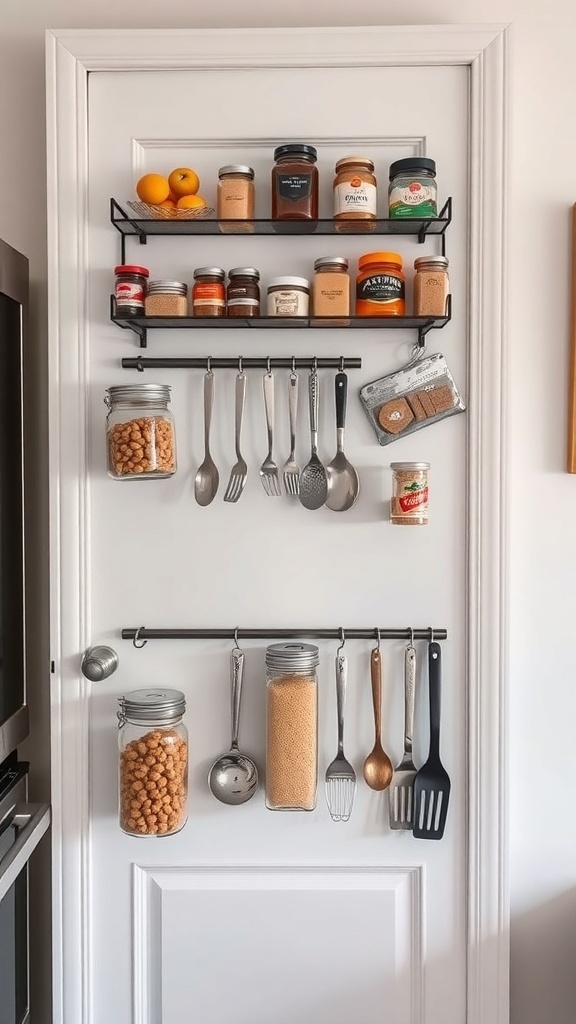
When it comes to small pantry organization, the door can be a hidden gem. The image shows a clever use of door space with shelves and hooks. This setup not only saves space but also keeps everything within easy reach.
The top shelf holds jars of spices and condiments, while a few fresh oranges add a pop of color. Below, a metal rod displays various utensils, making cooking more efficient. Clear jars filled with snacks or ingredients are also visible, adding a neat touch.
This kind of organization maximizes vertical space, allowing you to store more without cluttering your countertops. It’s a simple way to keep your pantry functional and stylish.
Grouping Similar Items
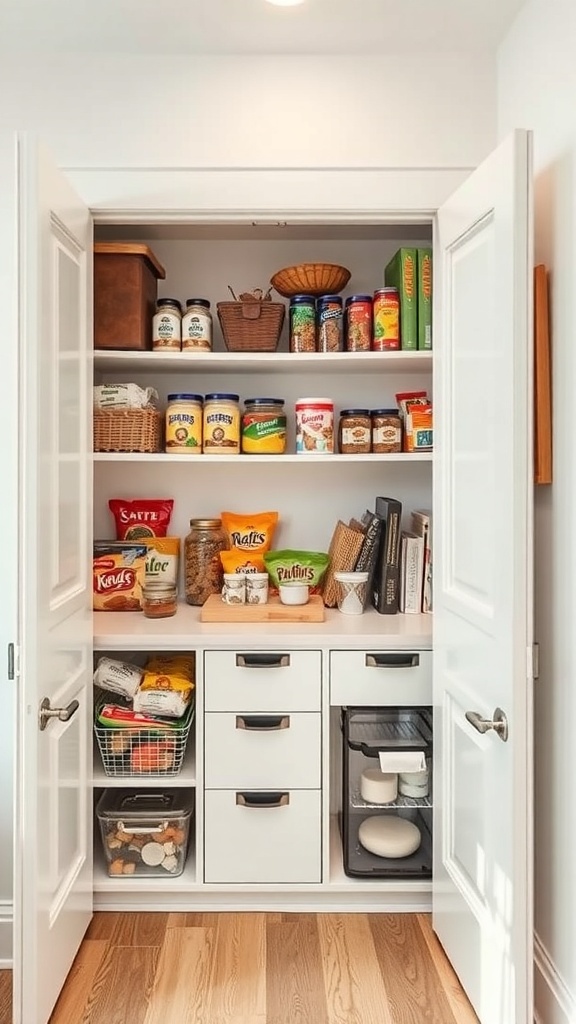
When organizing a small pantry, grouping similar items is key. This method not only saves space but also makes it easier to find what you need. In the image, you can see how different categories of food are neatly arranged on the shelves. For example, condiments are placed together, while snacks have their own section.
Using baskets or bins can help keep similar items together. In the pantry shown, jars and boxes are organized by type, making it clear where everything belongs. This approach reduces clutter and makes cooking more efficient.
Don’t forget to label your containers! Labels can help everyone in the household know where to find things and where to put them back. This simple step can keep your pantry looking tidy and organized.
Rotating Lazy Susans
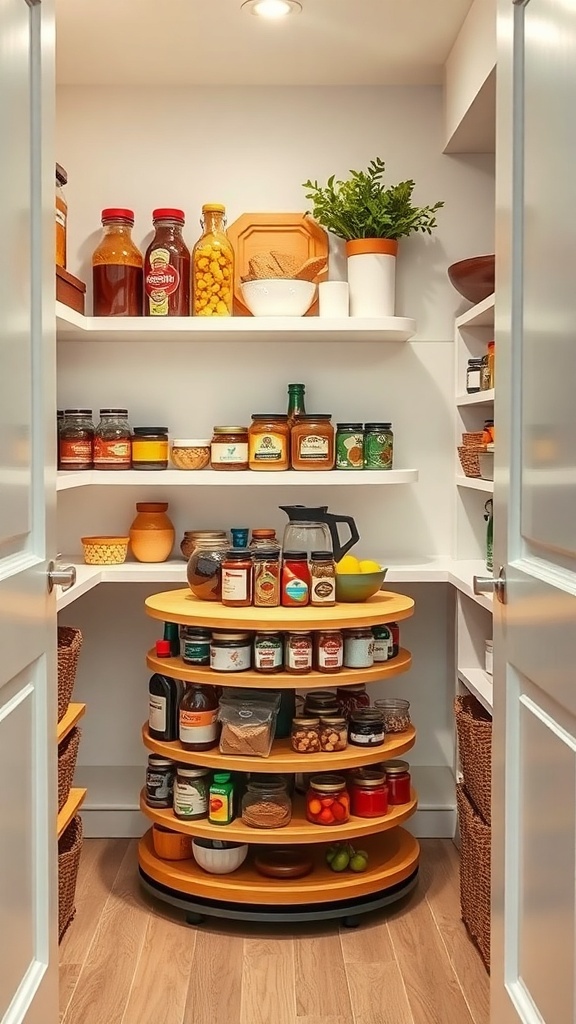
Rotating lazy Susans are a fantastic addition to any small pantry. They make accessing items easy and fun. With a simple spin, you can reach everything from spices to snacks without digging through clutter.
In the image, you can see a well-organized pantry featuring a rotating lazy Susan at the center. This design maximizes space and keeps everything visible. No more forgotten jars or cans hiding in the back!
Using a lazy Susan can help you categorize your items. You can group similar products together, like baking supplies or condiments. This way, it’s easier to find what you need when cooking or preparing meals.
Another perk is that lazy Susans can fit in tight corners. If your pantry has limited space, this tool can help you utilize every inch effectively. Just spin it around, and you have instant access to all your essentials!
Clear Containers for Visibility
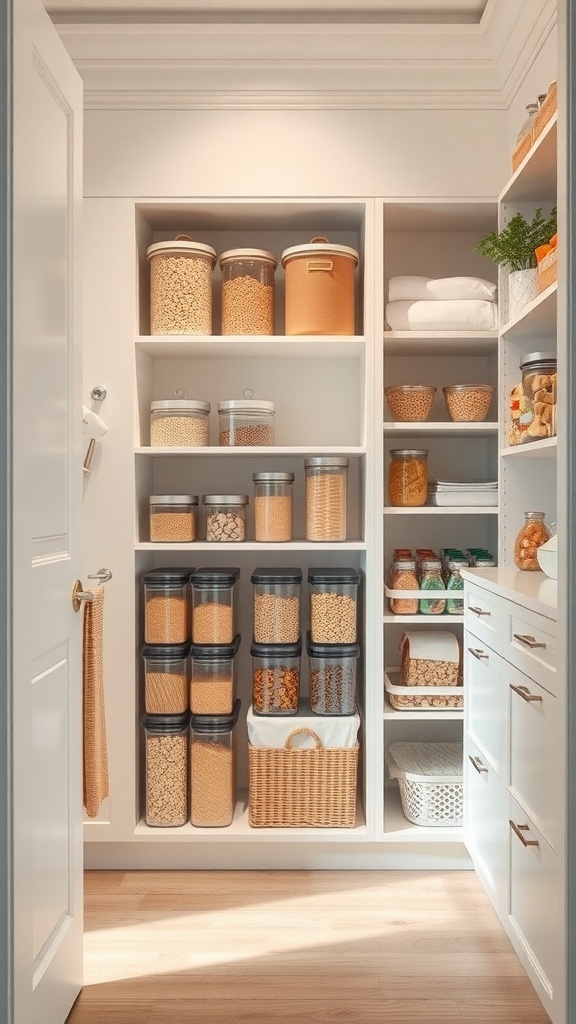
Clear containers are a fantastic way to organize your pantry. They allow you to see exactly what you have at a glance. This makes it easier to find ingredients when you’re cooking or baking.
In the image, you can see a well-organized pantry with various clear containers. Each container holds different items, from grains to snacks. This setup not only looks tidy but also helps in keeping track of your supplies.
Using clear containers can also help reduce food waste. When you can see what you have, you’re less likely to forget about items and let them go bad. Plus, they come in different sizes, so you can choose what works best for your space.
Incorporating labels can take your organization to the next level. You can easily label each container, making it simple for everyone in the household to find what they need. This is especially helpful if you have kids who want to help out in the kitchen.
Labeling for Easy Access
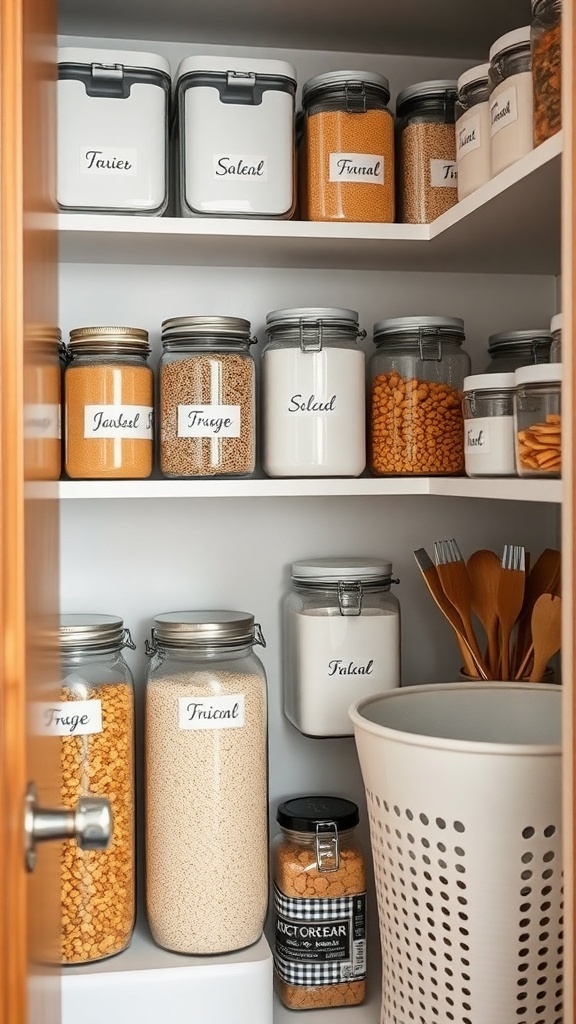
Labeling is a simple yet effective way to keep your pantry organized. In the image, you can see clear labels on each container, making it easy to find what you need. This small step can save you time and frustration when cooking.
Using uniform containers adds to the visual appeal. The jars and bins are neatly arranged, and their labels are easy to read. This not only helps in locating ingredients quickly but also gives your pantry a tidy look.
Consider using a label maker or handwritten tags for a personal touch. You can categorize items by type, such as grains, spices, or snacks. This method makes it simple to restock and maintain your pantry.
Don’t forget to label the containers that hold less common items. This ensures that everything has a designated spot, making your cooking experience smoother and more enjoyable.
Hanging Storage Solutions
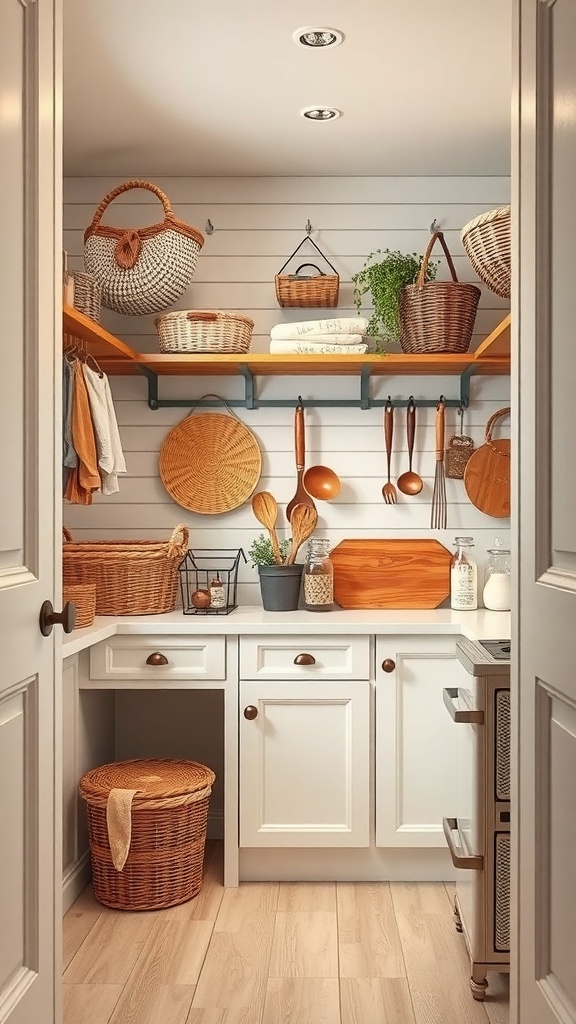
Hanging storage solutions can really transform a small pantry into an organized space. In the image, you can see how baskets and utensils are cleverly hung on the wall. This not only saves space but also makes everything easily accessible.
Using shelves to hold baskets is a great idea. You can store items like towels or snacks in these baskets, keeping them tidy and out of the way. The wooden shelves add a warm touch, making the pantry feel inviting.
Another smart move is hanging utensils and cutting boards. This keeps them within reach while cooking, and it adds a decorative element to the pantry. A few plants on the shelves bring a bit of life to the space, making it feel fresh.
Overall, these hanging storage solutions are perfect for maximizing space and keeping everything organized. You can easily find what you need without rummaging through clutter.
Stackable Bins for Storage
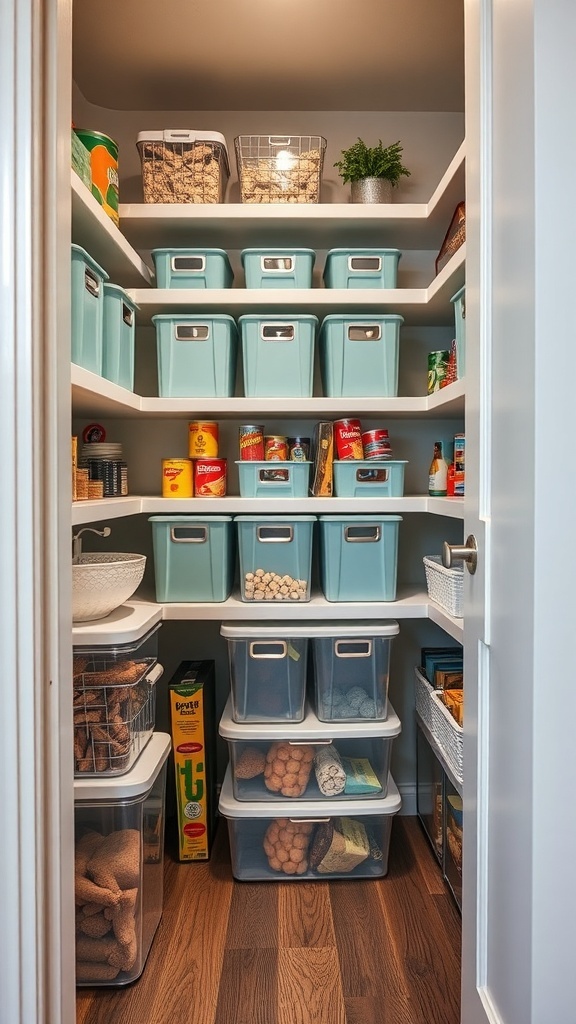
Stackable bins are a fantastic way to maximize space in a small pantry. In the image, you can see a well-organized pantry with various stackable bins neatly arranged on the shelves. These bins come in different sizes and colors, making it easy to categorize items while keeping everything visually appealing.
Using stackable bins allows you to take advantage of vertical space. Instead of cluttering your pantry with loose items, you can store snacks, canned goods, and baking supplies in these bins. This not only keeps things tidy but also makes it easier to find what you need.
Another great feature of stackable bins is their versatility. You can mix and match sizes to fit your pantry’s layout. The clear bins at the bottom of the image show how you can easily see what’s inside, which saves time when you’re cooking or baking.
Don’t forget to label your bins! This simple step can save you from rummaging through everything. You can use chalkboard labels or stickers for a fun touch. With stackable bins, your small pantry can be both functional and stylish.
Maximizing Vertical Space
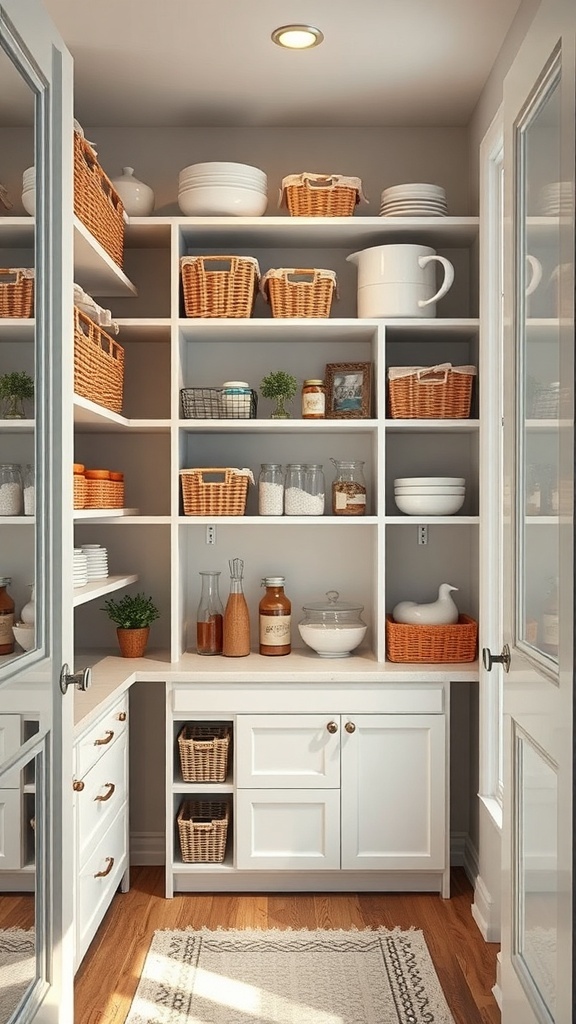
When it comes to small pantry organization, using vertical space is key. The image shows a well-organized pantry with shelves that reach up to the ceiling. This design makes the most of every inch available.
Notice how the shelves are filled with baskets and containers. These items not only look great but also help keep everything tidy. Using baskets allows you to store smaller items without cluttering the shelves. Plus, they’re easy to pull down when you need something.
The open shelving creates a light and airy feel. It’s easy to see what you have, which means you won’t forget about that can of beans hiding in the back. The clear containers for dry goods also help you keep track of what you need to restock.
Don’t forget about the space above! If you have items you don’t use often, consider placing them on the top shelves. Just make sure to use a sturdy step stool when reaching for them!
Using Shelf Risers for Extra Space
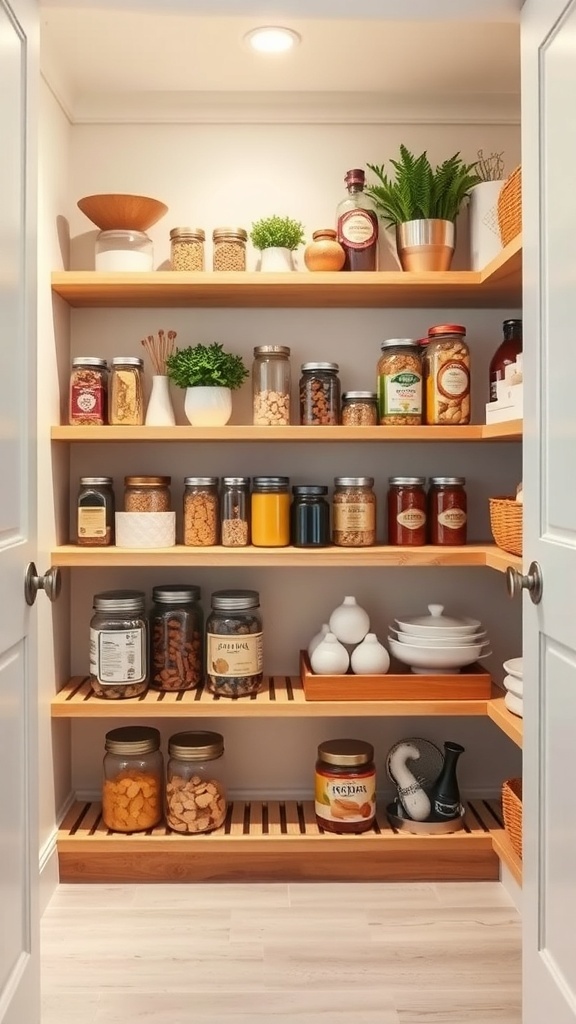
When it comes to pantry organization, shelf risers can be a simple yet effective solution. They help you maximize vertical space, allowing you to store more items without cluttering your shelves.
In the image, you can see how the shelf risers create layers. This setup makes it easy to spot jars and containers, so you won’t have to dig around to find what you need. The clear visibility helps keep everything tidy and accessible.
Using shelf risers also adds a nice touch to your pantry’s look. They can be made from wood or metal, blending in with your decor. Plus, they can hold various items, from spices to snacks, making them versatile.
Consider how you can arrange your pantry with these risers. Group similar items together and use labels for easy identification. This way, you can maintain an organized space that feels inviting and functional.
Incorporating Baskets for Clutter
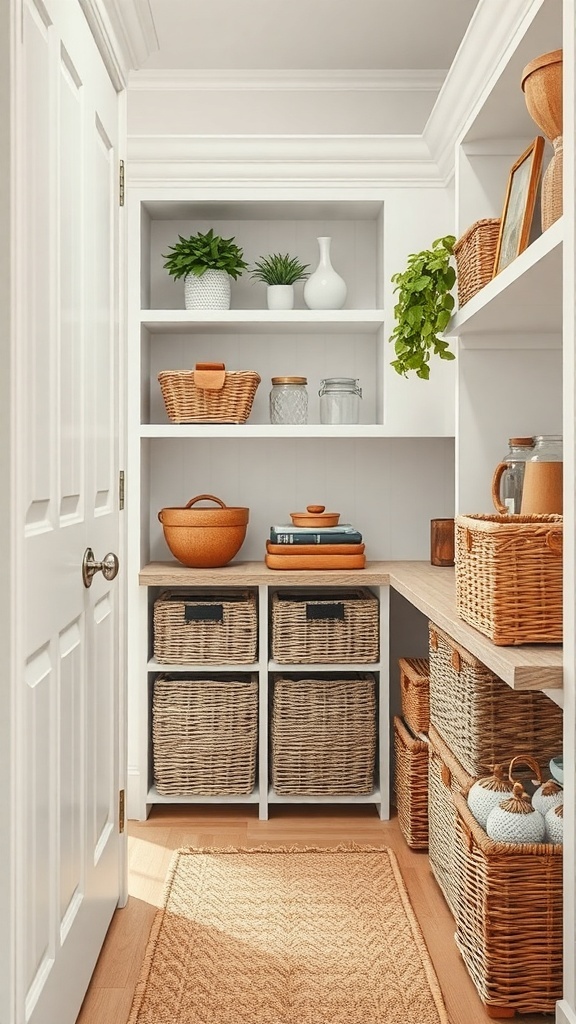
When it comes to organizing a small pantry, baskets are your best friends. They add a touch of style while keeping everything neat and tidy. In the image, you can see a lovely arrangement of various baskets that help manage clutter effectively.
The shelves are lined with woven baskets, each serving a purpose. Some hold snacks, while others might store kitchen essentials. This not only makes it easy to find what you need but also creates a visually appealing space.
Using different sizes and shapes of baskets can add character to your pantry. The mix of textures, like the natural fibers of the baskets, contrasts nicely with the clean lines of the shelves. This creates a cozy feel, making your pantry a pleasant place to be.
Don’t forget to label your baskets! This simple step can save you time when you’re in a rush. You can use tags or even chalkboard labels for a fun touch. With a little creativity, your pantry can be both functional and stylish.
Using Magnetic Strips for Spices
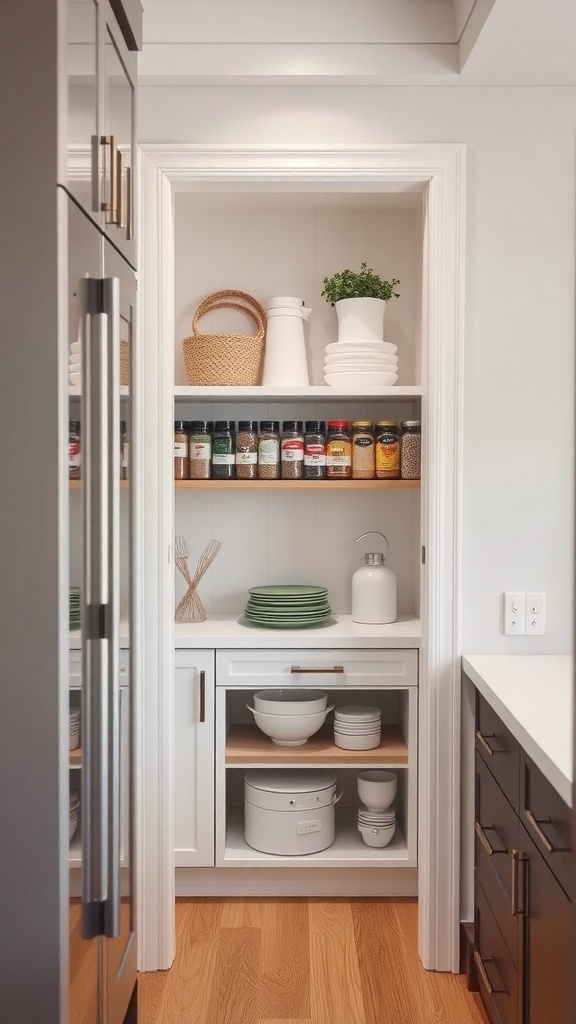
Magnetic strips are a fantastic way to organize spices in a small pantry. They save space and make it easy to find what you need while cooking. In the image, you can see a neatly arranged pantry with spices displayed on a magnetic strip. This setup not only looks great but also keeps your spices accessible.
Using magnetic strips allows you to free up shelf space for other items. You can attach small containers or jars to the strip, keeping your spices visible and within reach. This method is especially handy in tight spaces where every inch counts.
To set up your magnetic strip, simply choose a spot on the wall or inside your pantry door. Install the strip securely, then fill it with your favorite spices. You can even label the jars for quick identification. This way, you’ll always know where to find that pinch of paprika or dash of cumin!
Overall, magnetic strips are a smart and stylish solution for spice organization. They help you maintain a tidy pantry while adding a touch of modern flair to your kitchen.
Incorporating a Mini Herb Garden
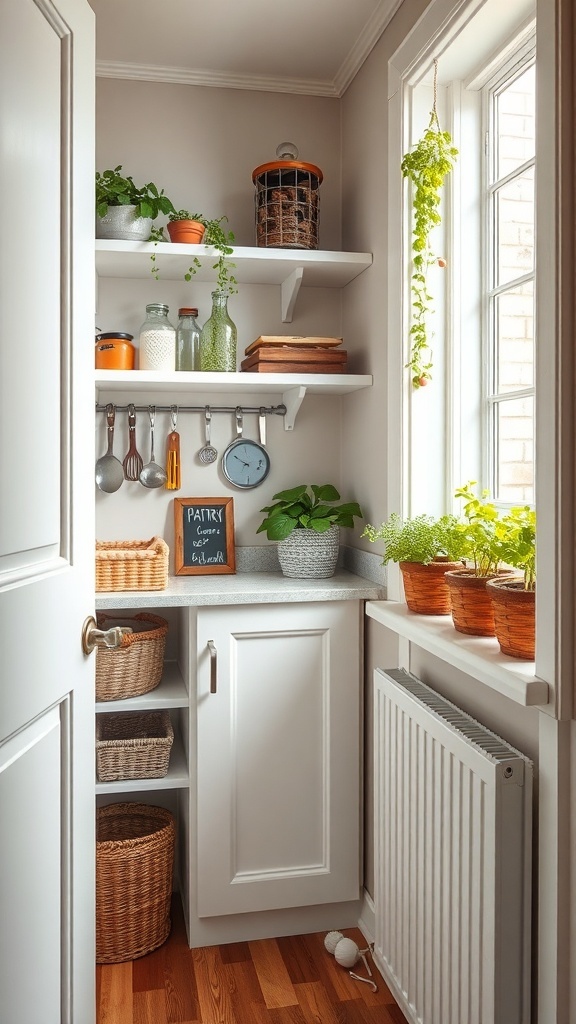
Creating a mini herb garden in your pantry is a fun and practical way to enhance your cooking experience. Imagine having fresh herbs at your fingertips whenever you need them. The image shows a cozy pantry space filled with vibrant green plants, making it not just functional but also visually appealing.
In the corner, you can see pots of herbs like basil and parsley, thriving in natural light. These plants not only add color to your pantry but also bring delightful aromas. Having fresh herbs can elevate your dishes, making even simple meals taste gourmet.
To start your mini herb garden, choose pots that fit your space. You can use small terracotta pots or even repurpose jars. Make sure they have drainage holes to keep the roots healthy. Place them on a windowsill or a shelf where they can soak up sunlight. Regular watering and occasional trimming will keep your herbs growing strong.
Consider planting herbs that you frequently use, such as cilantro, thyme, or rosemary. This way, you’ll always have fresh ingredients ready for your favorite recipes. Plus, caring for your plants can be a relaxing activity that adds a personal touch to your pantry.
Adjustable Shelving for Flexibility
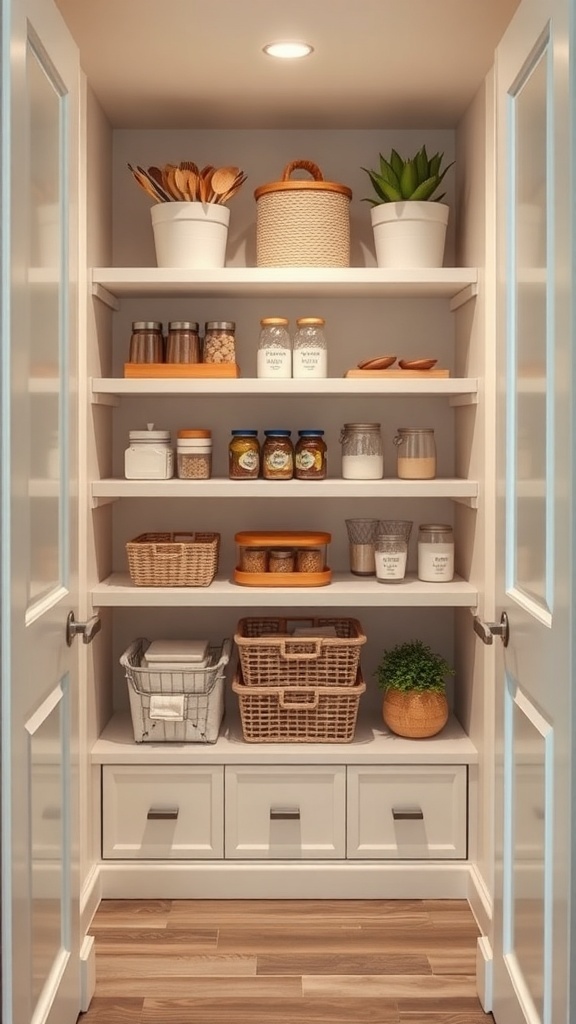
Adjustable shelving can make a big difference in how you organize your pantry. The image shows a well-organized pantry with multiple shelves that can be easily adjusted to fit various items. This flexibility allows you to maximize your space and keep everything accessible.
In the pantry, you can see jars, baskets, and containers neatly arranged. The top shelves hold lighter items, while the lower shelves are perfect for heavier jars and boxes. This setup not only looks tidy but also makes it easier to find what you need.
Using adjustable shelves means you can change the height based on your needs. If you buy larger items or want to store seasonal goods, you can simply move the shelves to create more room. This adaptability is key to maintaining an organized space.
Another great feature is that adjustable shelving can accommodate different types of containers. Whether you prefer glass jars, plastic bins, or woven baskets, you can arrange them to suit your style. This personalization adds a touch of flair to your pantry while keeping it functional.
Creating a Snack Zone
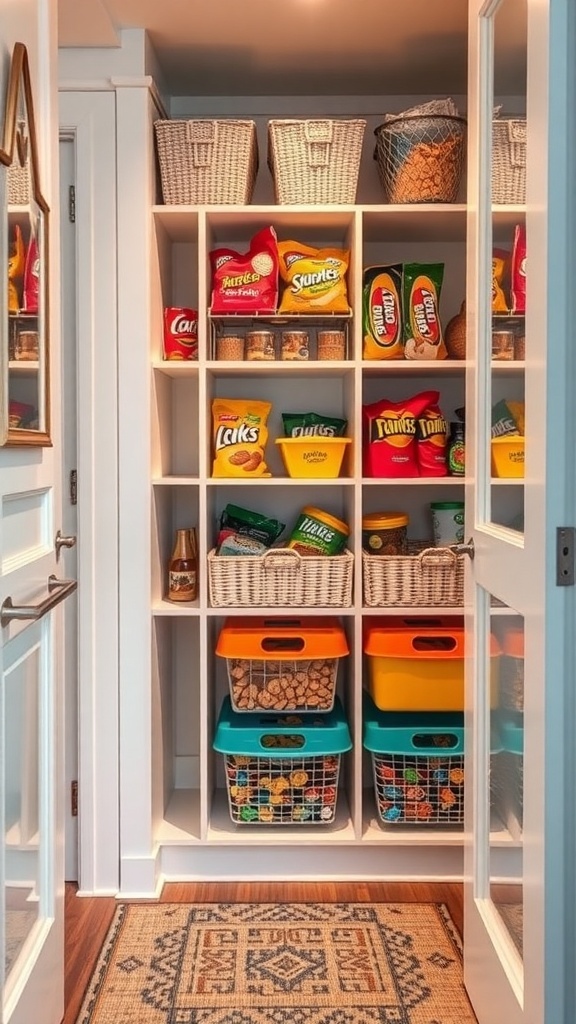
Creating a snack zone in your pantry can make snack time fun and easy. The image shows a well-organized pantry with various snacks neatly arranged. You can see colorful baskets and containers that help keep everything in its place.
Start by grouping similar snacks together. For example, put chips in one basket and granola bars in another. This makes it simple to find what you want. Use clear containers for items like nuts or dried fruits, so you can see what’s inside without digging around.
Labeling is a great way to keep things tidy. Use simple labels to mark each basket or container. This way, everyone in the family knows where to find their favorite snacks. You can even involve kids in the labeling process to make it a fun activity.
Don’t forget to consider the height of your pantry shelves. Place frequently used snacks at eye level for easy access. Reserve the higher shelves for less-used items. This small adjustment can make a big difference in how quickly you can grab a snack.
Creating a Baking Station
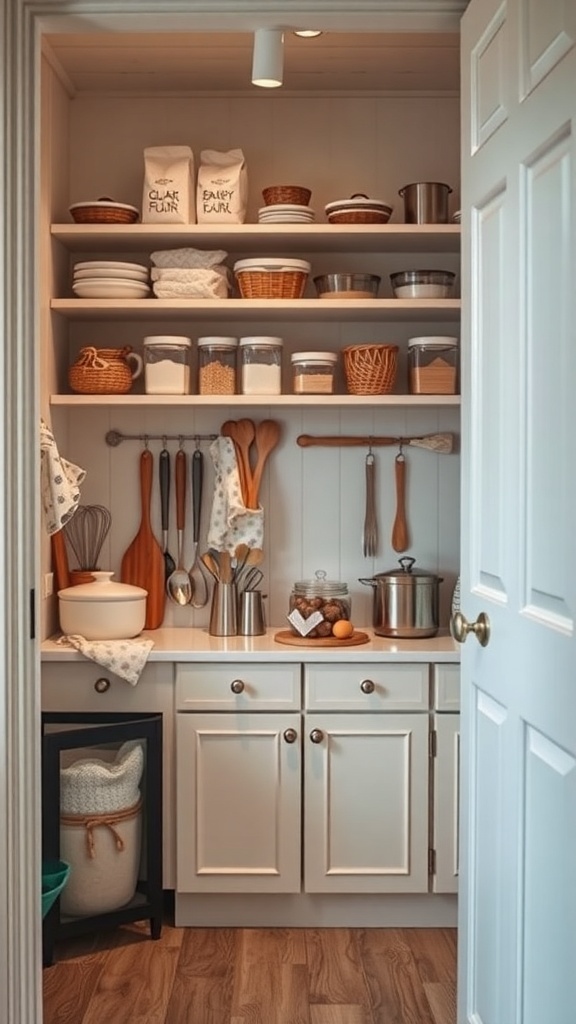
Setting up a baking station in your small pantry can make all the difference when it comes to whipping up your favorite treats. The image shows a well-organized space filled with essential baking items. You can see bags of flour, neatly stacked bowls, and various utensils ready for action.
Start by gathering your baking essentials. This includes flour, sugar, baking powder, and any other dry ingredients you often use. Clear containers work great for storing these items, keeping them fresh and visible. The jars in the image are perfect for this, as they allow you to see what’s inside at a glance.
Next, think about your tools. Wooden spoons, measuring cups, and mixing bowls should be easily accessible. The image highlights a tidy arrangement of utensils hanging on a rack, which saves space and keeps everything within reach. This setup encourages you to bake more often!
Don’t forget about the little extras. A few baskets can hold smaller items like cupcake liners or food coloring. This keeps your station clutter-free and organized. The cozy vibe of the pantry in the image shows how a little thought can create a welcoming baking area.
Finally, consider adding a small workspace if you have room. A clear counter space will help you mix and prepare your ingredients without feeling cramped. With everything neatly arranged, your small pantry can become a delightful baking station.
Seasonal Rotation of Ingredients
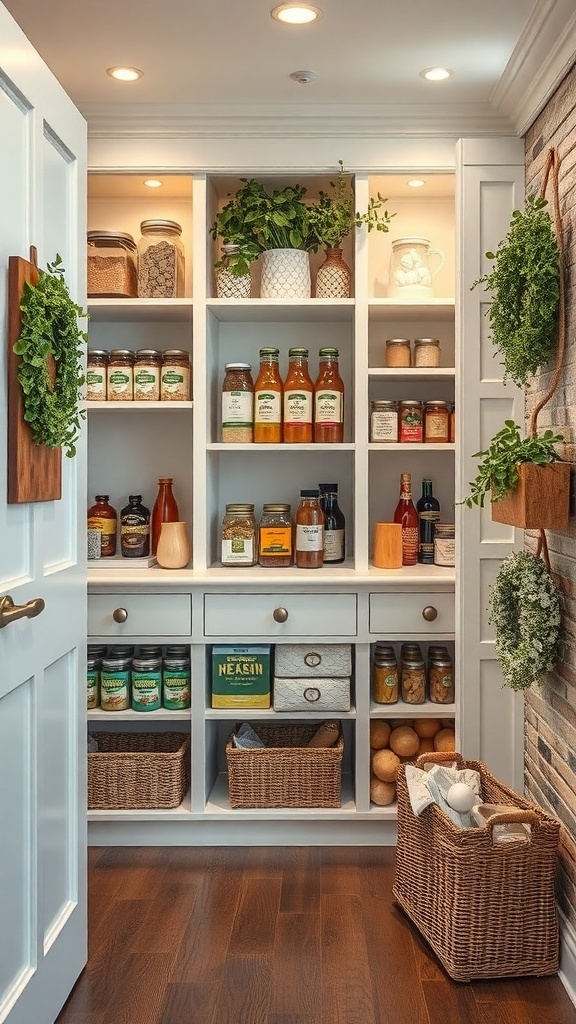
Keeping your pantry organized is key to making meal prep easier. A well-organized pantry allows you to see what you have and what you need. This image shows a beautifully arranged pantry with jars, bottles, and baskets neatly organized. The bright lighting highlights the variety of ingredients available, making it easy to grab what you need.
Seasonal rotation of ingredients is a smart way to keep your pantry fresh. For example, in the fall, you might want to stock up on pumpkin puree and spices like cinnamon and nutmeg. In the spring, consider adding lighter ingredients like fresh herbs and citrus. This not only keeps your meals exciting but also ensures that you use ingredients at their peak flavor.
When you rotate your pantry items, place older items in the front and newer ones in the back. This simple trick helps you use what you have before it expires. Also, consider labeling your jars and baskets. Clear labels make it easy to find what you need quickly, saving you time during busy cooking sessions.
Don’t forget to check your pantry regularly. A quick inventory can help you identify what needs to be used up soon. This practice not only reduces waste but also inspires creativity in the kitchen. You might discover a forgotten ingredient that sparks a new recipe idea!
Color-Coding for Quick Identification
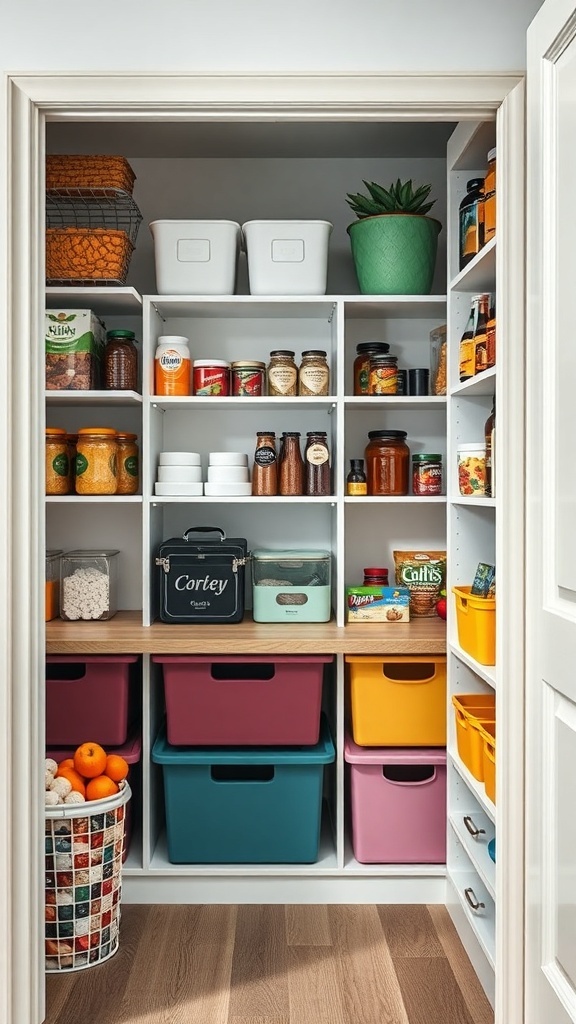
Color-coding your pantry can make a big difference in how quickly you find what you need. In the image, you can see a well-organized pantry with vibrant bins and jars. Each color represents different categories of items, making it easy to spot snacks, canned goods, or baking supplies.
For example, the bright yellow bins might hold pasta and grains, while the teal ones could be for snacks. This simple system helps you grab what you need without rummaging through everything. Plus, it adds a fun pop of color to your kitchen!
Using labels, like the one on the black container, can further enhance this organization. You can quickly identify what’s inside each bin, saving you time during meal prep. Overall, color-coding is not just practical; it also makes your pantry look inviting and neat.
Utilizing Clear Jars for Bulk Items
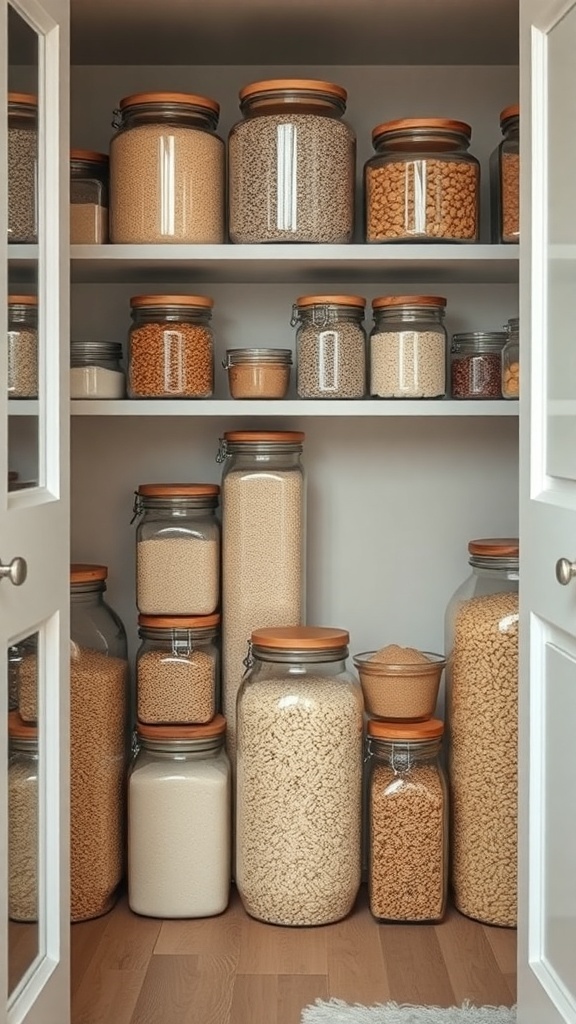
Clear jars are a fantastic way to organize bulk items in your pantry. They not only keep your ingredients fresh but also make it easy to see what you have at a glance. The image shows a well-organized pantry filled with various clear jars, each holding different grains, nuts, and snacks.
Using clear jars helps eliminate clutter. You can store rice, pasta, flour, and even snacks in these jars. The uniformity of the jars creates a clean look, making your pantry feel more spacious. Plus, the airtight seals keep everything fresh longer.
Labeling each jar is a great idea. You can easily identify contents without opening them. This saves time when cooking or baking. It’s also a fun way to personalize your pantry. You can use chalkboard labels or simple stickers for a neat touch.
Overall, clear jars are practical and stylish. They transform a chaotic pantry into a well-organized space. If you’re looking to tidy up your pantry, consider investing in some clear jars. They might just be the solution you need!
Incorporating a Small Step Stool
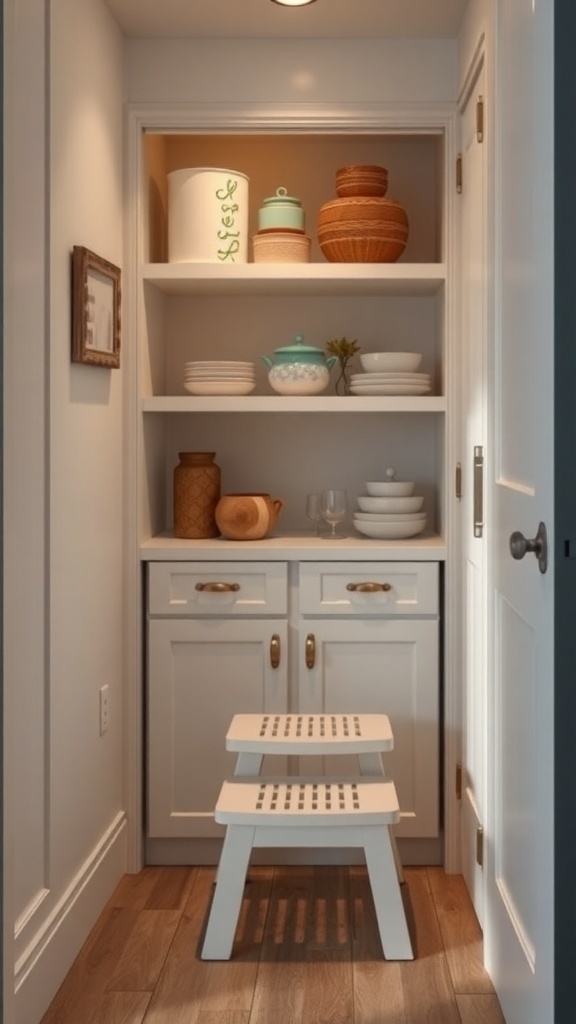
When organizing a small pantry, every inch counts. A small step stool can be a handy tool for reaching those high shelves. It’s not just about convenience; it also helps you utilize vertical space effectively.
In the image, you can see a neat pantry with a step stool placed right in front. This setup invites easy access to items stored on the upper shelves. The stool is simple yet functional, making it a perfect fit for a cozy pantry.
Using a step stool allows you to store more items above eye level. You can keep seasonal dishes or extra supplies up high, freeing up lower shelves for everyday essentials. This way, your pantry stays organized and clutter-free.
Remember to choose a stool that’s sturdy and easy to move. A lightweight option can make it simple to grab when you need it. With the right step stool, you can make the most of your small pantry space.
Implementing a FIFO System
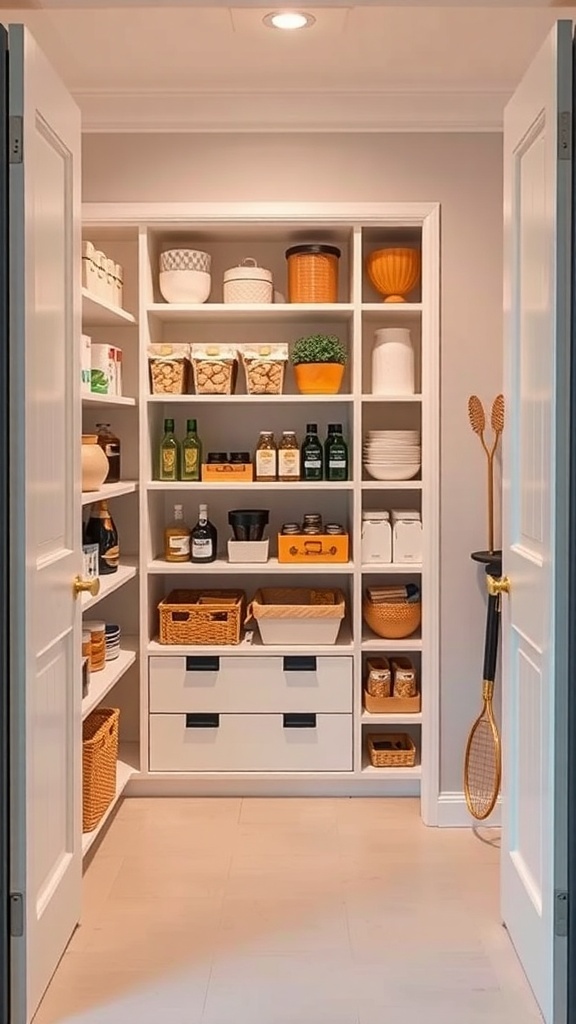
Keeping your pantry organized can be a breeze with a FIFO (First In, First Out) system. This method ensures that older items are used before newer ones, reducing waste and keeping your food fresh.
In the image, you can see a well-structured pantry. The shelves are neatly arranged, making it easy to spot items. Clear containers hold snacks and ingredients, while labels help identify everything at a glance. This setup is perfect for a FIFO system.
To implement FIFO, place new items at the back and older ones at the front. This way, you’ll grab the older items first when you reach for something. It’s a simple trick that can save you money and keep your pantry tidy.
Using baskets or bins can also help. You can group similar items together, making it easier to manage your pantry. For example, keep all your baking supplies in one bin and snacks in another. This not only looks great but also makes it easier to follow the FIFO principle.
Common Small Pantry Organization Mistakes to Avoid
- Organizing for looks instead of function
- Not using vertical space effectively
- Overcrowding shelves
- Ignoring categories and grouping
- Forgetting to label containers
- Keeping expired or unused items
Final Thoughts
Organizing a small pantry doesn’t require a complete overhaul. With the right system in place, even a compact space can become efficient, functional, and easy to maintain.
The key is to focus on how you use your pantry every day. When your layout, storage, and organization work together, your pantry becomes easier to manage and far more practical.

Jasmine Hart is the founder and primary author behind MyNestHaven, a home decor and interior inspiration website focused on practical, real-life design ideas.
She shares styling inspiration, organization tips, and space-conscious solutions to help readers create homes that feel both functional and visually appealing. Her approach focuses on simplicity and usability, with an emphasis on ideas that can be applied to everyday living spaces.
Through MyNestHaven, Jasmine provides room-by-room decor ideas, small space solutions, and practical guidance designed to make home design feel more approachable and achievable.